
What’s good for humans is good for the environment
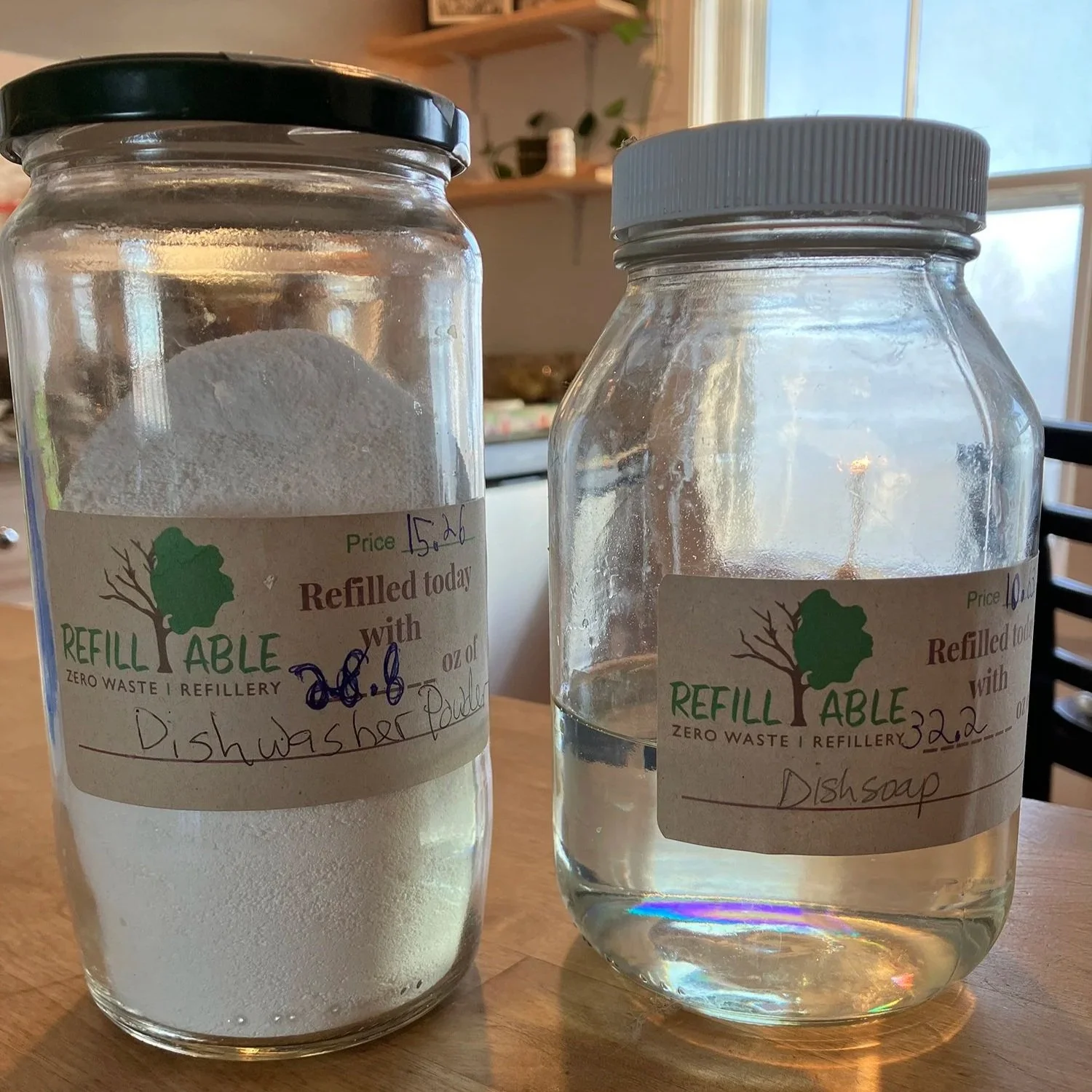
Dishwasher detergent (left) and dish soap (right) purchased from Refill-Able, where they offer bulk home and personal supplies. I used my own jars which are weighed and filled to the quantity I requested. See Resources for more information on this concept.
Environment Matters
Our environment - both internal and external - plays an enormous role in our health. For this post I’ll focus on our immediate external environment, specifically what we come into contact with in our homes. Our home environment includes the floors, walls, furniture, air, water, plants, animals and products that we interact with many times each day, week, month and year. The additive effect of our home environment cannot be overlooked as a contributor to the health-disease continuum. For this first post of a soon-to-come series, I will address cleaning supplies and personal care products.
A Cleaning Industry
Many “cleaning” products contain strong chemicals, fragrances, and other substances which remain on surfaces, in the air, and/or on our skin. The cleaning product industry in the US is a billion dollar industry, selling a vast array of products marketed for specific areas of a home: kitchen, floors, counter tops, bathrooms, tubs, toilets, carpets, etc. In addition to this, the popularity of “air fresheners” has given rise to another huge market of such products, in every imaginable size, fragrance and delivery mechanism. Both the cleaning products and air fresheners are largely composed of numerous chemicals and packaged in single-use plastic, the majority of which is not recyclable (think spray bottle or squeeze bottle caps, air freshener plug-ins, etc).
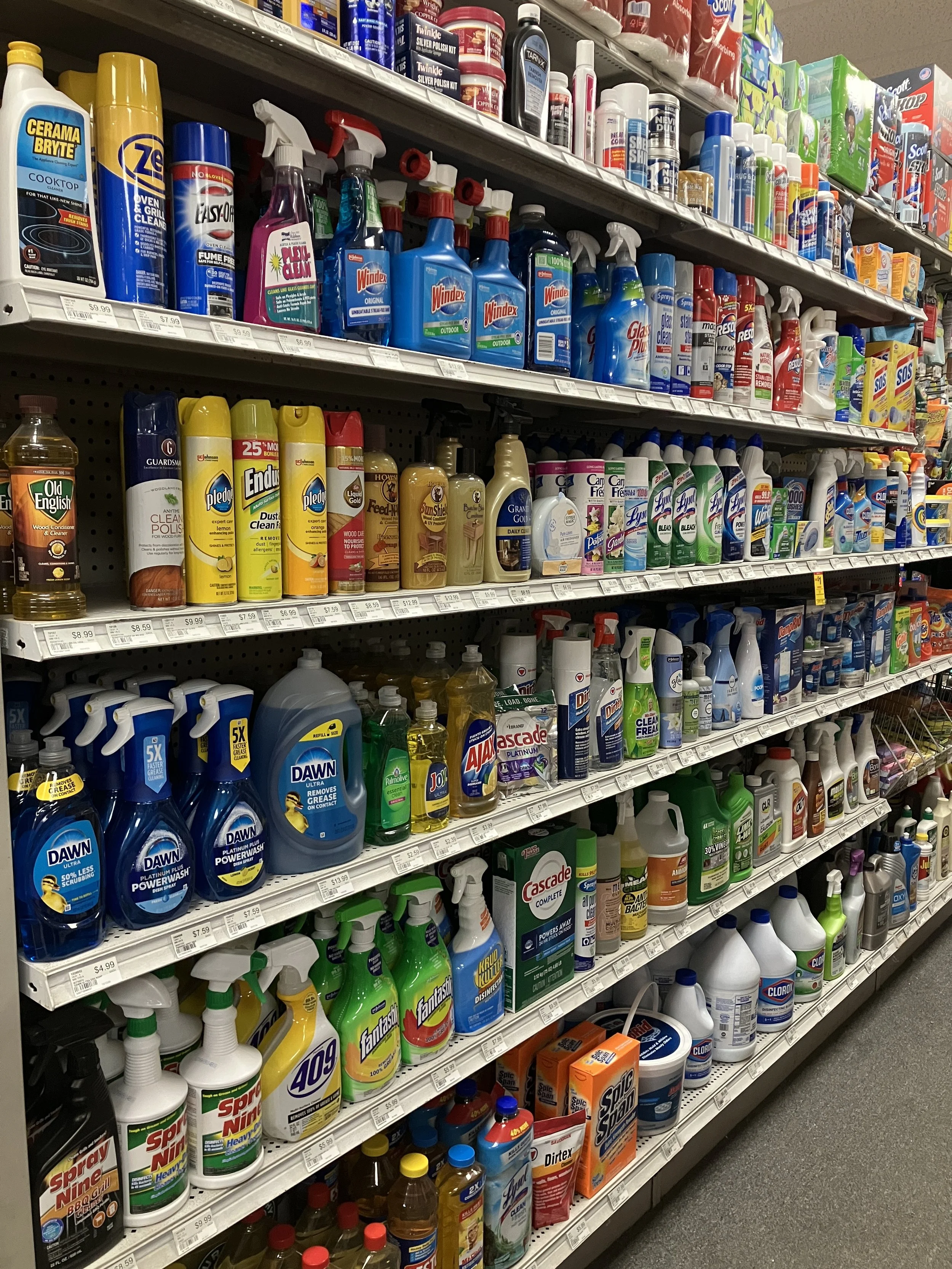
A small aisle of cleaning supplies at a hardware store.
The reality is that thanks to widespread public health and hygiene infrastructure in the US, we don’t have to worry about microbial contamination of our water (most of the time, though there can be exceptions), and in a home environment there is little need for incredibly toxic anti-microbial cleaning agents. The overuse and obsession with “cleanness” and anti-microbial everything has actually led to our immune systems having less exposure to the common microbes in the world, an increase in allergies and autoimmune conditions. For more on this phenomenon, read about “The Hygiene Hypothesis and our immune systems.”
I am not promoting a no-cleaning agenda here, but rather hoping to right-size the over emphasis on cleaning products in the US which are unnecessarily toxic, plastic- and chemical-laden, expensive and contribute to the overall burden of exposures we face day to day.
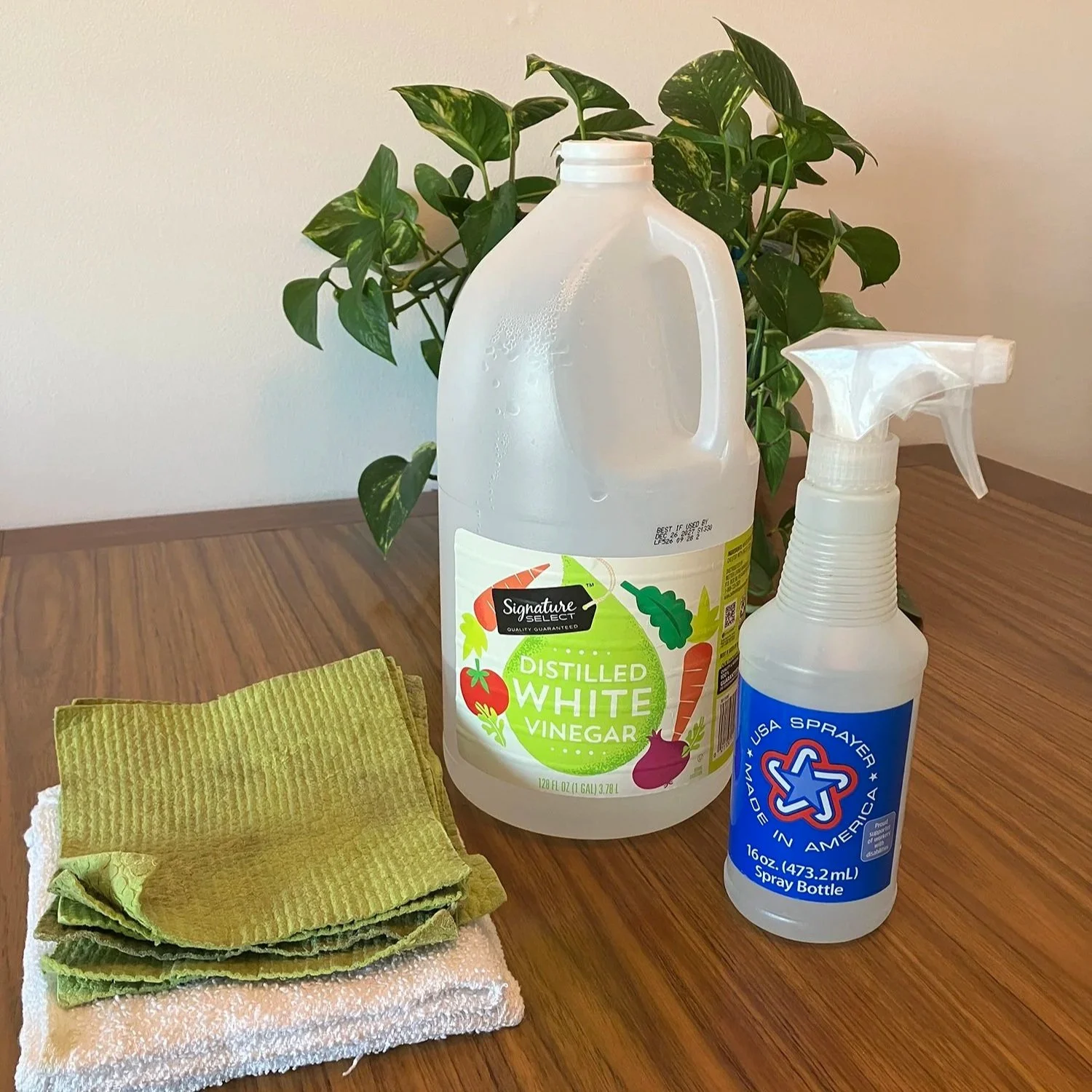
These are my humble cleaning supplies: reuseable cloth rags, white vinegar and the spray bottle containing half vinegar and half water. You’ll notice they are in plastic bottles. It is almost impossible to entirely avoid all plastic, but minimizing the amount goes a long way. I hope to find bulk vinegar at my Refill-Able store soon!
So what do I recommend and use for home cleaning?
White vinegar diluted with water, baking soda and a mild (eco-friendly/natural) dish soap all go a long way for natural, inexpensive and effective cleaning. Not only does this approach eliminate chemicals on your hands, in the air, and on home surfaces, but it also greatly reduces the amount of plastic involved in cleaning. It is cost saving, and reduces risks to adults, children, and pets coming in contact with highly toxic cleaning supplies.
To make an all-purpose surface cleaner: find an empty spray-bottle, fill half with white vinegar, half with water. For natural fragrance options, add a few drops of essential oil (citrus, lemon, lavender, pine, etc) to your dilute vinegar mixture.
Where to use? I use my dilute-vinegar cleaning spray everywhere - to wipe down kitchen counters, cabinets and other surfaces. For hardwood or tile floors, I use a damp microfiber mop and spray the dilute-vinegar on the floors as I mop. For bathroom cleaning I use a version of the dilute-vinegar for a shower spray (both for maintenance and cleaning), and for toilet bowl cleaner. (I’ll share additional Recipes in the next post of this series)
Laundry and Personal Care supplies: I recommend a slow, steady process of phasing out chemicals and plastic wherever possible in your laundry and personal care supplies. Plastic and certain classes of common chemicals (like BPA, phthalates, PFAS) are well-established endocrine disrupting chemicals, meaning they mimic and/or disrupt our body’s hormones and their cycles leading to a range of diseases and implications. Any step, however small, that we take to reduce our exposure is better for us and better for the environment.
In the next post for this series I’ll share some healthier options and approaches to personal care supplies such as shampoo, lotions and make up. Below is a recipe for a basic shower cleaning spray. And in the meantime, check out the Environmental Working Group’s guides to Home Cleaning and Personal Care.
I’ll close with a principle which weaves through so much of my approach to health and life:
What is good for us is good for the planet.
-
Shower Spray
1 c water
1 c white vinegar
½ c isopropyl alcohol
1 tsp liquid dish soap
15 drops of tea tree essential oil (optional)
15 drops of lemon essential oil (optional)
Combine ingredients into a large spray bottle. Spray as a cleaner or for shower maintenance.