
People have always done food together
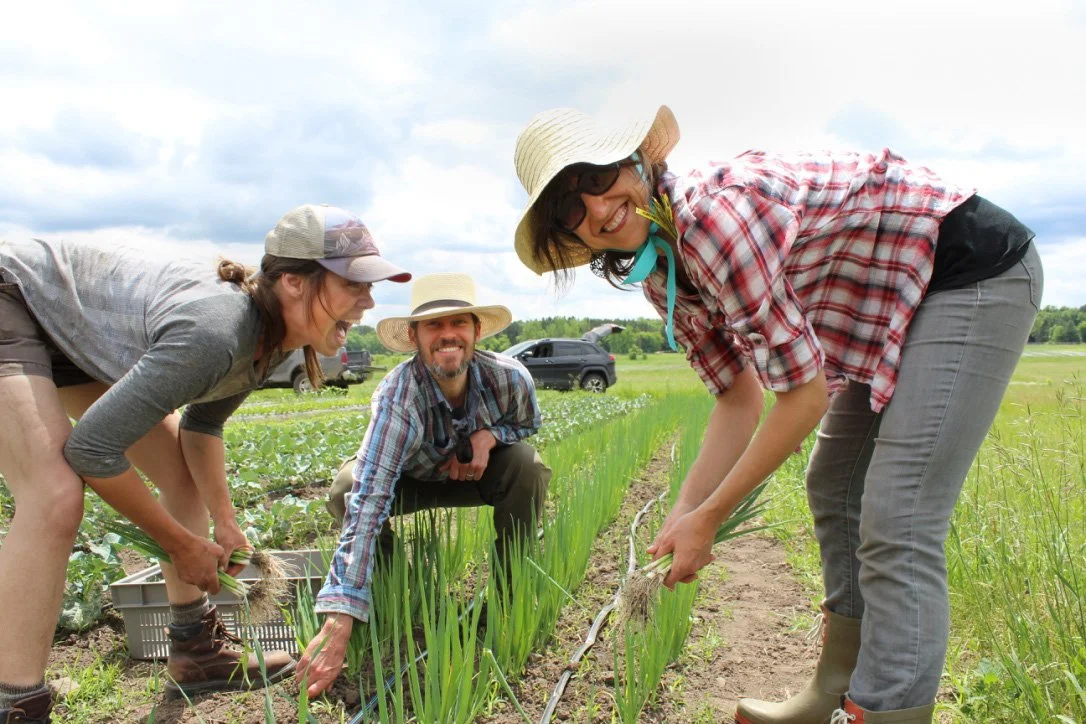
This photo was taken on a perfect June day at Big River Farms, where my husband Dan (center) and I (right) were training in Organic Farming Our farm manager Molly (left) was teaching us how to harvest green onions for the first time and we were having a blast! Laughing, talking about the amazing aroma of the green onions, and marveling at how the tiny tiny seeds we had started in the greenhouse some 4 months prior were coming up in beautiful, fragrant green onions. Dan and I were novices to farming, and our growing love for, care about and interest in where/how our food came from led us to find the Big River Farmer Education Program where we learned alongside wise, experienced farmers for 2 years. It was there that I learned: people have always done food together.
Independence vs Inter-dependence
Much of US society seems focused on independence and self-sufficiency, perhaps not surprising given the foundations of this nation. Though these attitudes may be a source of pride for many, I have seen independence turn to isolation for various reasons, the pandemic era (2020 - present) being the most recent, society-wide source of increasing rates of social isolation. The US is not alone in this trend. The UK appointed a “Loneliness Minister” to their national government in 2021 to specifically lead efforts in their nation to improve loneliness and isolation, recognizing the profound impacts of social isolation on health. In 2023, the US Surgeon General issued a report called “Our Epidemic of Loneliness and Isolation.” That people in societies would be lonely or isolated is a relatively recent phenomenon in the world. All cultures from the beginning of time, out of necessity, functioned in an interdependent and communal manner. One of the most important areas of this interdependence being as it relates to food. People have always done food together.
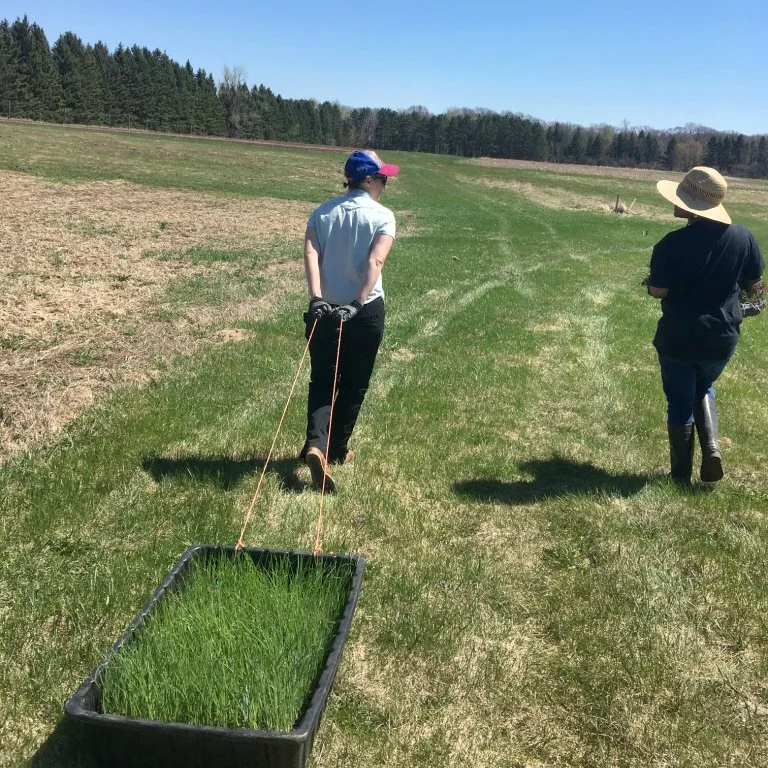
Big River Farm farmers taking seedings to the field.
Interconnectedness
Hunting, gathering, sowing, tending, harvesting, preserving, preparing…all aspects of the food cycle require community effort - in cooperation with the environment - in order to survive as a society.
These practices are clearly not the norm today for most people in wealthy Western countries, given our industrialized, corporatized, often anonymous and disconnected global food system.
However, that interconnectedness is no less real or needed when it comes to food and life in our modern world. We have only to look at the natural world, where all things are interconnected and interdependent. The water, air, soil, microbes, pollinators, insects, plants and all the creatures are a web of interdependence and interconnection.
Individualism vs. Community
All this said, our food system and larger societal culture are structured around individualism and “convenience” rather than community and a priority on relationships, nourishment, enjoyment and care. And do these things matter for health? Most definitely.
Slowing down to taste the tastes, smell the smells, and feel the feelings experienced through eating shifts the body into the parasympathetic nervous system - our “rest and digest” state - which is necessary for proper digestion, immune function and healing. It is also the state of our nervous system which promotes the best social connection … even if one is eating alone. There is an inherent social connection waiting to be discovered with our food, and the many beings involved in our food’s story.
“All flourishing is mutual.”
Perhaps you are wondering, how can I start finding more connection with food, community and health? You’re in the right place.
A few ideas to get started:
Look for a farmer’s market and try buying a few items directly from the grower/producer of the food
Start incorporating some mindful eating moments
Make an intentional dinner plan with someone, and make a plan to talk about the food experience (with phones off and away).